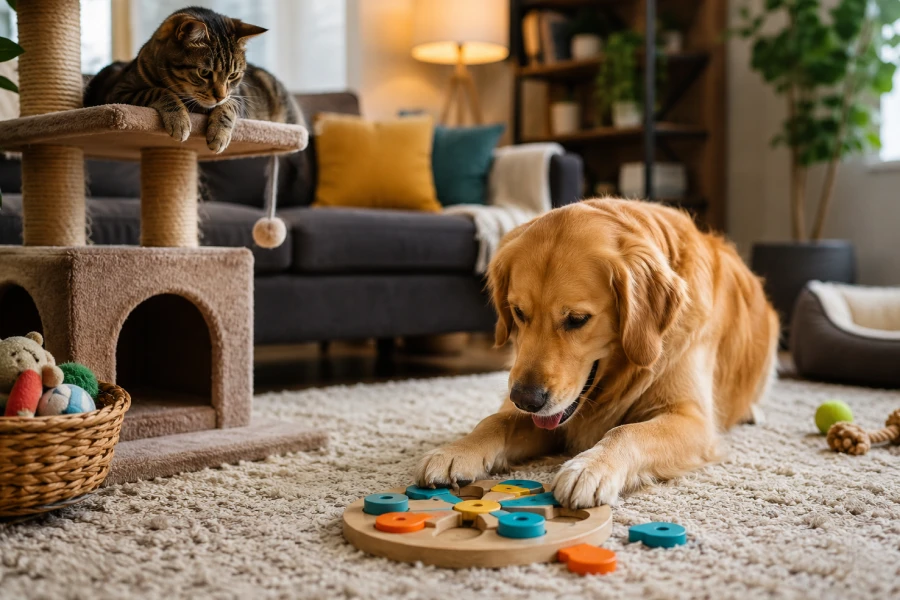
Pet enrichment activities can change the entire mood of a home. They give pets a useful outlet for energy. They also make ordinary days feel more engaging. Many owners notice problems only after boredom creates noise, chewing, scratching, or clingy behavior. A better approach starts before frustration builds. Pets need variety, purpose, and small daily wins. The right rhythm helps them settle faster. It also supports a stronger bond with you. Your home feels calmer when your pet has something meaningful to do. That is why enrichment deserves a place in everyday care.
Pets behave better when their minds stay active. A bored dog may invent work through barking or chewing. A restless cat may climb, knock items down, or demand attention. These habits often look naughty, yet they usually signal unmet needs. The fun pet activities inside a thoughtful routine help redirect that energy. Your pet learns that daily life includes challenges and rewards. This creates more predictable behavior. It also reduces random bursts of frustration. Small activities can bring big emotional balance. Consistency matters more than complicated equipment.
Every pet shows boredom differently. Some pets become loud. Others become withdrawn or overly attached. A dog may pace near doors or stare at you constantly. A cat may ignore toys yet chase shadows at midnight. These details help you choose better activities. Watch the time of day when your pet becomes restless. Notice which textures, smells, sounds, or movements draw attention. Then use those clues to shape better play. The strongest enrichment plan feels personal. Your pet already gives you the information you need.
Busy homes need realistic routines. Nobody wants a system that collapses after two days. Short sessions work beautifully when they feel intentional. Five minutes of sniffing, chasing, searching, or solving can shift your pet’s mood. mental stimulation for dogs can happen before breakfast or after work. Cats can enjoy hide-and-find games while you prepare dinner. Rotate activities instead of adding more clutter. Keep supplies in one easy basket. This removes friction from the routine. Simple planning makes enrichment easier to repeat.
A lasting rhythm should match your real life. Start with your pet’s most difficult time of day. Many animals need help during mornings, evenings, or long quiet afternoons. Add one activity before that difficult window begins. This prevents behavior problems instead of reacting to them. Keep sessions short enough to feel manageable. Change only one detail at a time. Your pet learns the pattern through repetition. The routine becomes easier because it feels expected. Over time, enrichment becomes part of the household rhythm.
Small homes can still support excellent enrichment. A hallway can become a scent trail. A blanket can become a puzzle. A cardboard box can become a discovery station. Cats enjoy vertical movement and hidden treats. Dogs often love sniffing tasks more than long indoor running. cat enrichment ideas can turn shelves, paper bags, and window spots into useful spaces. You do not need a large yard. You need smart variety. Pets respond to novelty, not square footage.
Start with one habit you can repeat. Choose a simple search game, puzzle meal, or calm sensory activity. Add it to a moment that already exists. Morning feeding is a natural place to begin. Evening cleanup can also become a play reset. The daily pet engagement approach works because it fits into normal life. Your pet gets structure without demanding constant entertainment. You gain a calmer companion. Progress feels steady and visible. Better days begin with small, repeatable choices.

Leave a comment